

First-time buyer mortgages
Couple Holding Child Smiling Chequered Tattoos

First-time buyers

Getting on the property ladder can be tough. There's the issue of saving your deposit and once you've done that, it's understanding the process which can be super stressful. We understand how difficult this can be, so we're here to help.

What is a first-time buyer?

In the simplest terms, a first-time buyer (FTB) is someone who is purchasing their first residential property and has never owned a home before. However, for mortgage lenders and the Government (when calculating Stamp Duty), the definition is quite specific.
To qualify as a first-time buyer, you must:

  • Have no previous ownership: You must not have previously owned a home, or a share of a home, in the UK or anywhere else in the world.
  • Intend to live in the property: The home you are buying must be intended as your main residence, rather than a buy-to-let investment.
  • Be a sole or joint first-timer: If you are buying with a partner, both of you must meet the criteria to qualify for specific first-time buyer benefits, such as Stamp Duty relief or certain types of mortgages.
How do you buy your first house?

While the thought of buying your first home is exciting, the actual process can feel like a maze of jargon, paperwork, and legal checks. From the moment you start saving your deposit to the day you finally get the keys, knowing what happens next can take the stress out of the journey.

How do I know how much I can borrow?

Find out how much you could afford in minutes. Our affordability calculator is designed specifically to take the guesswork out of your search as much as possible. It gives you a quick, reliable estimate of your borrowing potential without affecting your credit score.

Saving for a deposit for your first home

Saving for a deposit is often the biggest hurdle for first-time buyers, but having a clear target makes the mountain much easier to climb. Use our tool to turn your "maybe one day" into a concrete deposit plan.

Boost your deposit with a 25% Government bonus

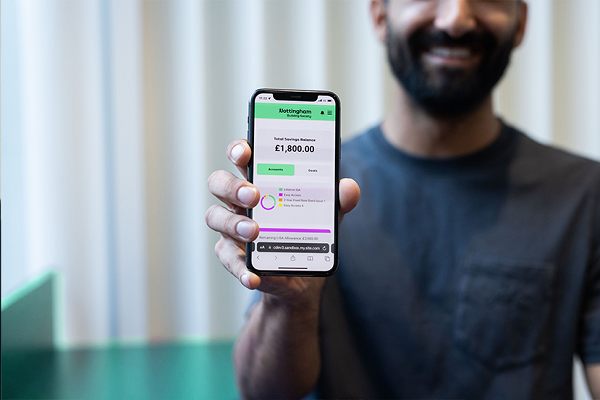
Saving for a deposit is often the biggest hurdle for first-time buyers. That’s where a Lifetime ISA (LISA) can be a game-changer for your mortgage journey.

Designed specifically for those aged 18-39 buying their first home, the LISA offers a 25% Government bonus on everything you save, up to £4,000 each tax year. That means if you save the maximum amount, the government adds £1,000 of free money to your pot every year.

Read product information
Colleague Holding Phone Showing NBS App
Read product information

Where can first-time buyers find independent mortgage advice?

Mortgage Advice Bureau is working with Nottingham Building Society to get the right mortgage for your new home. Our advisers have access to over 12,000 mortgages from over 90 trusted lenders to find the right fit. Just answer a few quick questions about the property and how much you want to borrow. Then, we'll call you to chat about your options. Let’s turn that homeownership dream into a reality.

Frequently asked questions

Am I still considered a first-time buyer if my partner isn’t?

Individually, yes; as a couple, no. While you personally retain your status for things like your Lifetime ISA, for the purpose of a joint mortgage and Stamp Duty, the Government treats you as a single unit. If one person has owned property before, the whole transaction loses its "first-time buyer" status.

Do we still get Stamp Duty relief?

Unfortunately, no. To qualify for first-time buyer relief in England and Northern Ireland (where you pay 0% tax on the first £300,000), all purchasers must be first-time buyers.

  • As of April 1, 2025, the threshold for standard buyers has reverted to £125,000.
  • This means you will likely pay the standard residential rates of Stamp Duty on any property priced above that amount.

Can I get a first-time buyer mortgage and rent it out? 

No, you will not be able to get a first-time buyer residential mortgage and then rent it out. First-time buyer mortgages are for people who will live in the property as their main residence.

If you are going to buy a property that you wish to rent out and not live in, you will need to apply for a buy-to-let mortgage.

Can I get a mortgage with bad credit?

Yes, it is often still possible to get a mortgage with a lower credit score, though your options may be different. We also recommend using services like CreditLadder who we work with to report your rent payments and help build your credit history before applying.

Does Stamp Duty affect first-time buyers?

For first-time buyers in England and Northern Ireland, Stamp Duty (SDLT) is a significant factor in budgeting because you are often eligible for first-time buyers’ relief. However, the rules for this relief changed on April 1, 2025, significantly lowering the thresholds. Find out more on Stamp Duty for first-time buyers.

How much can I borrow as a first-time buyer?

The amount you can borrow depends on your annual income, your outgoings, and your credit score. Generally, lenders may offer around 4 to 4.5 times your annual income, but this varies. By speaking to a Mortgage Advice Bureau adviser through us, you can search thousands of mortgages to find a lender that fits your specific financial situation.

How much deposit do I typically need for my first home?

Most lenders usually require a deposit of at least 5% to 10% of the property's value. However, a larger deposit can often give you access to better interest rates. If you are struggling to save, our Lifetime ISA is designed to help first-time buyers aged 18-39 boost their savings with a 25% Government bonus.

What are the other costs that can be involved with buying my first home?

Typical costs that may incur when buying a house include:

  • Conveyancing fees: payment for your solicitor’s time and expertise in handling the legal aspects of buying a property. Find out more on conveyancing and home surveys.
  • Search fees: costs paid to local authorities to check for things like planning issues, flood risks, or local mines.
  • Mortgage valuation: a basic inspection required by the lender to confirm the property is worth the price you’re paying.
  • Land registry fees: the fee paid to the government to register you as the new legal owner.
  • Electronic transfer fee: a small charge for the secure transfer of large sums of money between banks and solicitors.
  • Stamp Duty: a Government tax that applies if your property price exceeds specific thresholds (even with first-time buyer relief).

View more information on house buying costs.

What documents do I need to apply for a first-time buyer mortgage? 

Here is a simple checklist of what lenders might ask for and you may need to have ready:

1. Who you are (ID and address)

Lenders just need to make sure you are who you say you are.

  • Photo ID: your current Passport or driving licence.
  • Proof of where you live: two recent documents (less than 3 months old) like a utility bill or a bank statement.
  • The electoral roll: make sure you're registered to vote at your current address it’s the quickest way for them to verify you!

2. How much you earn (income)

The bank wants to see that you have a steady stream of money coming in.

  • If you’re employed: your last three months of payslips and your most recent P60 (the summary your job gives you at the end of the tax year).
  • If you’re self-employed: usually your tax returns (SA302s) from the last 2 years.

3. How you spend (bank statements)

Lenders will ask for your last three to six months of bank statements. They aren't judging your coffee habit! They just want to see:

  • Your salary being paid in.
  • That you can comfortably afford your future mortgage payments alongside your current bills.

4. Where your savings deposit came from

You’ll need to show how you saved up your deposit.

  • Your own savings: statements showing the money growing over time.
  • Help from family: if a relative is gifting you money, the lender may need them to sign a gifted deposit letter confirming it’s a gift and doesn’t need to be paid back

Quick tips 

  • No app screenshots: lenders usually need official PDF versions of your statements. You can usually download these easily from your online banking portal.
  • Tidy up your accounts: in the three months before you apply, try to avoid things like unarranged overdrafts or lots of gambling transactions, as these can be red flags for some lenders.

What is a decision in principle?

A decision in principle (also called a mortgage in principle) is a statement from a lender saying that, in theory, they would lend you a certain amount. It’s not a full mortgage offer, but having one shows estate agents that you are a serious buyer and ready to make an offer on a home.

Improve your credit score by reporting rent payments

Your credit position is one of the aspects of a mortgage application that a lender really scrutinises. Having a higher credit score for a mortgage shows them how good you are at paying money that you’ve borrowed back. Having a higher credit position would show them that you’re a safer bet to lend money to than someone with a lower credit score.

Reporting your rent payments could boost your credit position - that's why we've teamed up with CreditLadder, the first and only way for you to do this with the four main CRA's (or Credit Reference Agencies) in the UK.

Learn more about the initiative
Nottingham Clock
Learn more about the initiative

Why use Mortgage Advice Bureau??

We want to make sure you get the right mortgage advice, that's why we're working with Mortgage Advice Bureau who have 1,600 advisers and access to 12,000 mortgages.

Glossary of mortgage terms

Buying a home is generally the most important purchase you’re likely to make and we know the terminology can often be confusing. We've broken down the jargon and put it in plain English to help you navigate through the maze of mortgage jargon.

What's the cost of buying a home

What is the true cost of buying a house? Find out what you may end up paying on top of your monthly mortgage payments.